On this page
efore buying a pre-owned Patek Philippe, understand that four things decide what you are actually buying — the reference, the condition, the papers and the seller — and that each constrains the next.
Establish the full reference, have the case and movement numbers read from inside the watch by an authorised party, read condition claims as the seller’s representations rather than measurements, and confirm whether the Certificate of Origin is present — Patek Philippe states it can never be re-issued.[1] Then establish who is selling, and what recourse that leaves you.[14]
A lower price with missing papers is not a discount. It is a permanent condition of that watch, and the question worth answering before transferring funds is whether you understand the piece, its documented history and the terms of the transaction.
Summary
The reference. A model name is not a reference. Patek Philippe identifies each watch by a full reference whose letter tracks the metal — 5811/1G-001 white gold, 5712/1R-001 rose gold.[2] Confirm the configuration on the reference’s own page; without it there is no comparison set.
The condition. A grade such as Excellent or Unworn is the seller’s description, so ask what it rests on. Ask for evidence that can be checked: detailed photographs, service documentation and who inspected the watch.
The papers. Box and booklets can be replaced; the Certificate of Origin cannot be re-issued.[1] An Extract from the Archives can be ordered once first sale is more than ten years past, for 500 Swiss francs — about A$869 at the Reserve Bank rate on 2 October 2026.[4][15]
The seller and your recourse. Buying from a business in Australia, other than at a traditional auction, brings the full set of consumer guarantees. In a private sale most fall away; the Australian Competition and Consumer Commission states three still apply: title, undisturbed possession, no hidden debts or charges.[14]
What it costs beyond the price. Wrist-watches enter Australia duty-free, but not tax-free: goods and services tax applies at 10%.[20][16] Servicing every eight to ten years, no Patek Philippe service centre in Australia, and a possible strap permit all sit outside the asking price.[6][8][22]
This article is general information about the watch market. It is not a valuation of any particular piece, and it is not advice on whether to buy, sell or hold one.
Every watch HYPA offers, buys or sources is assessed on its own: authenticity, condition, provenance and completeness, in the market as it stands on the day.
Key takeaways
Who this is for
This guide is for Australian buyers considering a pre-owned Patek Philippe at any price, and for owners assessing what their documentation is worth. It is particularly relevant to:
- buyers comparing Australian and overseas businesses, private sellers or auction houses;
- those weighing a lower price against absent papers or an undocumented service history;
- anyone importing who wants the total Australian cost before committing.
It does not replace a watchmaker’s inspection, a valuation, or your own tax or legal advice.
How this guide was prepared
This article draws on Patek Philippe’s own service, points-of-sale and collection pages; on guidance from the Australian Competition and Consumer Commission, Scamwatch, Consumer Affairs Victoria, Australian Border Force, the Australian Taxation Office and the Department of Climate Change, Energy, the Environment and Water; on Reserve Bank of Australia exchange rates; and on HYPA International’s published terms and returns policy. Patek Philippe publishes suggested retail price indications for current references in some markets, but states it cannot provide resale-value information, so this guide contains no retail-versus-pre-owned value comparison.[13][1]
Factors at a glance
| Factor | Why it matters | What to establish |
|---|---|---|
| Exact reference | Without it there is no comparison set | Full reference, and the configuration confirmed on Patek’s page for it |
| Case and movement numbers | They are inside the watch, not on it | Read by an authorised party and matched to the Certificate |
| Case and lugs | Refinishing changes the original geometry | Sharpness of chamfers and lug edges against the reference |
| Dial, hands and markers | Service parts are not original parts | Whether anything was replaced, and when |
| Bracelet, clasp or strap | Wear concentrates here and strap material matters | Whether the clasp and bracelet are original, and whether the strap is reptile |
| Polishing | At an official service it is requested, not automatic | Whether it was requested, and whether the service record shows it |
| Service history | It is important documentary evidence of work performed | Dates, who did the work, and the available invoices or service records |
| Water resistance | A rating describes the watch as made | Whether it has been pressure-tested, and when |
| Certificate of Origin | It can never be re-issued | Present, or permanently absent |
| Extract eligibility | It is barred for recent watches | First sale more than ten years ago, and not under service |
| Seller type | It decides which guarantees apply | Business or private, and the registration if a business |
| Total Australian cost | The price is not the cost | Tax, charges, any permit, and the next service |
Confirm the exact reference
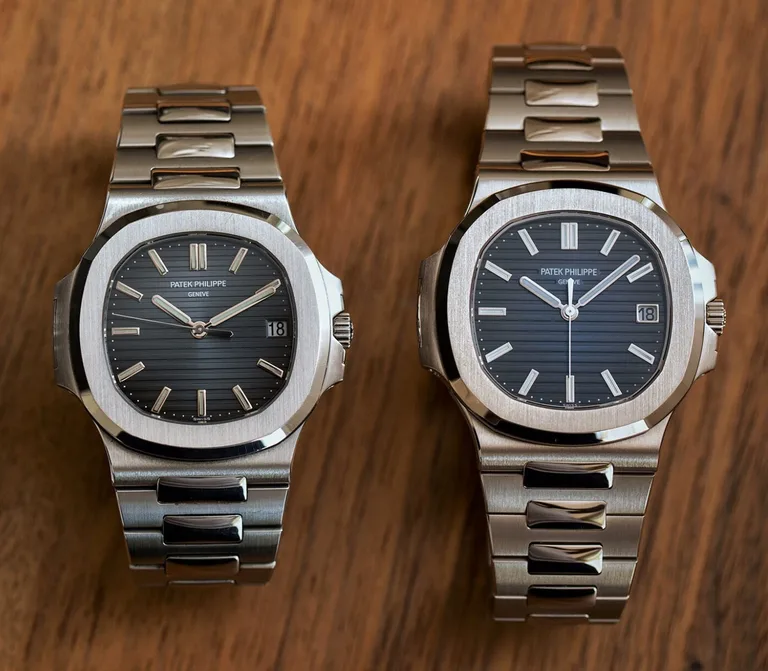
A reference is not a model name. Patek Philippe’s current Nautilus pages show 5811/1G-001 and 5740/1G-001 in white gold, and 7118/1200R-001 and 5712/1R-001 in rose gold.[2] The letter tracks the metal, while the rest encodes variant detail for which Patek publishes no key, so confirm the configuration on the reference’s own page. Our Nautilus collection, reference by reference counts 43 of them by model number, metal and movement.
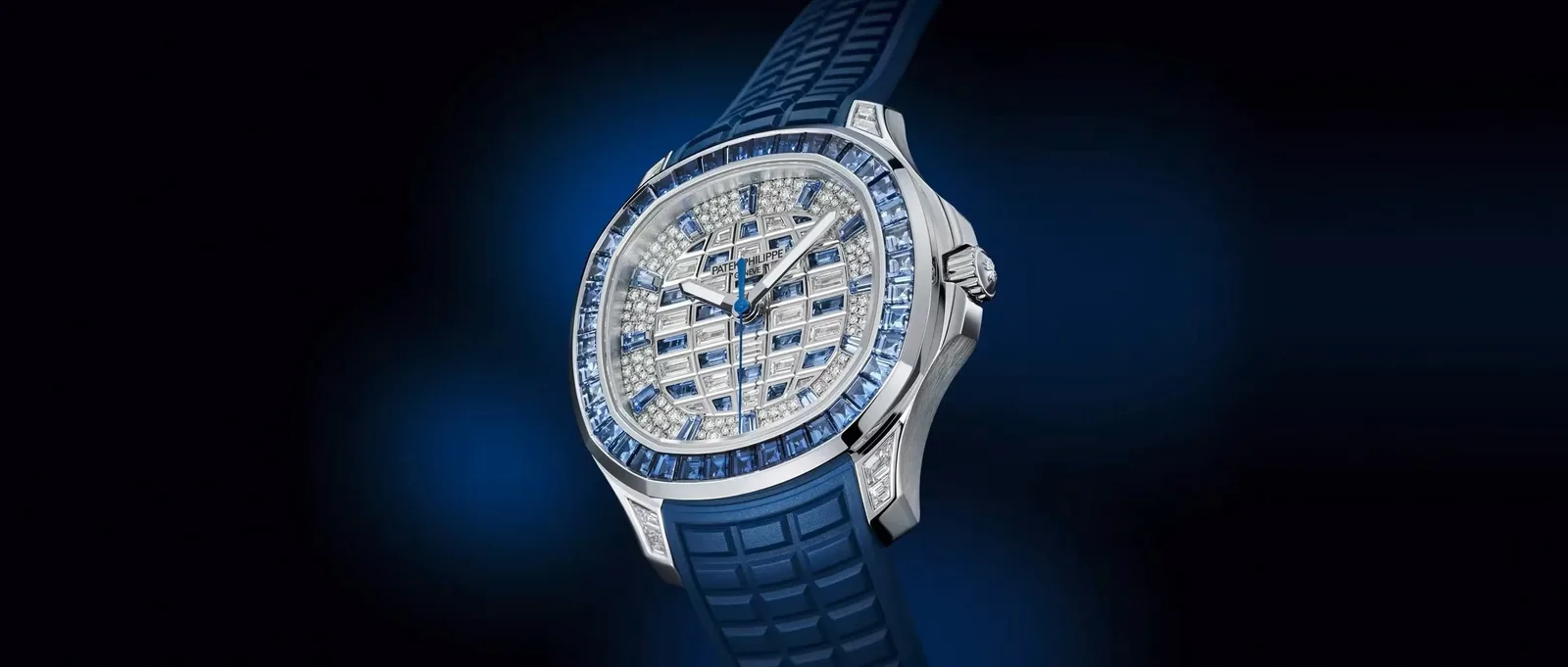
The discipline applies across the collections: an Aquanaut, a Complications calendar and a Nautilus share a naming logic and little else. Establish whether it is still in production — one recent enough to appear on a current collection page is often too recent for an Extract, which requires first sale more than ten years earlier.[4] For one that has left it, how we source a reference you cannot find covers that.
Have the case and movement numbers read
This is the most useful thing to understand before reading any listing. Patek Philippe states that the movement number is engraved in the movement and the case number inside the case back, and that the case back should only be opened by an authorised retailer or service centre.[1]
Until one of them has read the numbers, “the numbers match the papers” is something the seller has said, not something anyone has checked. Ask who established that they match, and whether an authorised retailer or service centre will confirm it in writing.
There is a second reason this matters. An Extract application normally needs photographs of the serial numbers, which means the same authorised opening, unless a service invoice from within the service guarantee period stands in.[4] Documentation and identification run through one physical step, not two independent checks.
Treat condition claims as representations
A condition grade such as Excellent or Unworn is a representation the seller makes, and a business is accountable for it. Ask for what can be evidenced: photographs of named areas, the last service invoice, and who inspected it.
The physical assessment concentrates where original geometry is hardest to restore. On a Nautilus or Aquanaut the case flanks, chamfers and bracelet transition show refinishing before the dial does; on a Complications calendar or moonphase, the pushers and aperture printing repay the same attention.
Originality is a separate question from wear. At a service Patek Philippe replaces worn parts when required, and a dial, bracelet or crystal may be replaced at additional cost;[3][10] its restoration atelier retains original components wherever possible.[9] Service documentation is therefore evidence of recorded replacement work, to be read alongside the physical inspection, not proof that every fitted component is original.
Ask whether polishing was requested
Patek Philippe describes a full service in five steps, and on the external parts it is specific: they are disassembled, inspected, cleaned and, if requested by the customer, polished.[3]
That inverts the assumption most buyers start with. Ask whether polishing was requested and whether the available service documentation records it. An unpolished case is still a claim to be evidenced, not a description to accept.
Establish the service history and the next service cost
Patek Philippe recommends servicing every eight to ten years through an official service centre or authorised retailer.[6] Its published maximum full-service prices run from 600 Swiss francs for quartz to 2,700 for Complication III watches — about A$1,043 to A$4,694 at the Reserve Bank of Australia rate on 2 October 2026, before taxes — with Grand Complications and classic watches priced on request. Refreshing the case and bracelet is not included and is invoiced separately: CHF 350 for the case or the bracelet, CHF 500 for both, about A$608 and A$869.[10][15]
Time matters as much as money. Patek Philippe describes a full service as lasting six to twelve weeks, quality control alone taking fourteen days and including checks of air-tightness and rate accuracy.[3] An estimate is immediate for modern pieces needing standard work without visible damage, otherwise usually within five working days.[3]
For an Australian owner: Patek Philippe lists five points of sale here, in four cities — J. Farren-Price Jewellers and the Patek Philippe Boutique Sydney by The Hour Glass in Sydney, the Patek Philippe Boutique Melbourne by The Hour Glass, The Hour Glass in Brisbane, and Watches of Switzerland in Perth — offering Essential or Premium maintenance.[7] None of its service centres is in Australia.[8]
Water resistance needs the same care. Patek Philippe announced in 2024 a unified 30-metre standard for its water-resistant watches, tested in air and by immersion at three bars of overpressure.[11] That describes a watch as made; the care page asks owners to check in the user guide whether their watch is water-resistant.[6] Air-tightness is checked in a full service’s quality control,[3] and four of the five Australian points of sale list water-resistance testing among their Essential Maintenance services, so a watch can be tested between full services.[7] Until a pre-owned watch has been tested, treat its water resistance as unknown.
Define what “papers” actually means
Treating “box and papers” as one thing is where buyers overpay. Rank them by replaceability.
The Certificate of Origin is first and alone: Patek Philippe states it can never be re-issued.[1] Service invoices are second and underrated: they are the record of the work done. An Extract is third: useful, not a Certificate. Box and booklets are fourth — they move the price and prove nothing.
Check whether an Extract can be ordered
Patek Philippe describes an Extract as a partial transcript regarding a particular timepiece from archives kept since 1839.[4] Four conditions govern it: first sale more than ten years earlier; one per timepiece in any twelve months; no processing while the watch is under service; and a fee of 500 Swiss francs, refundable if the watch proves ineligible.[4]
Patek Philippe asks for photographs to verify the visual compliance of the timepiece with the description in its archive journals:[4] a comparison against an archive record, not a judgement on the object, and its authenticity FAQ describes no buyer authentication service.[1] An Extract tells you what the archive says, not that the watch before you is the watch in it.
Establish the date of first sale
Two regimes exist. Patek Philippe announced in 2024 that for all new watches sold from 1 May 2024 its international warranty increases from two years to five,[11] so the date of first sale decides which applied. Where the Certificate is absent, an Extract records the date of sale for an eligible watch.[5] Patek Philippe’s announcement does not say whether the warranty passes to a later owner, so get the seller’s position in writing — and the Australian Competition and Consumer Commission treats a seller’s warranty as operating in addition to consumer guarantees, never instead of them.[14]
Work out which protections you have
Buying from a business in Australia, other than at a traditional auction, brings the full set of consumer guarantees. In a private sale — the Australian Competition and Consumer Commission’s example is a one-off sale between two people where the seller is not running a business — most do not apply. Three do: title, undisturbed possession, and no hidden debts or charges.[14] In our view, the price gap between a dealer and a private seller is often the protection gap.
Two further positions matter. For a product bought for business use the Commission applies alternative conditions, one being that it costs less than $100,000 including goods and services tax, another that it is commonly bought for personal, domestic or household use.[14] Whether a purchase counts as business use is a question for your own adviser. Where a business does not officially offer its products in Australia, the Commission states consumers aren’t covered by the Australian Consumer Law. An overseas business that sells directly to consumers in Australia must follow it, though the Commission notes that in practice a repair, replacement or refund can be difficult to get from one.[14]
Verify the seller and settle how you pay
Start with whether the business exists. Scamwatch advises looking for the ABN and checking it on ABN Lookup, which is free, needs no login, and lists checking a business before buying as one of its uses.[17][18] Victoria adds a second register: Consumer Affairs Victoria advises confirming that a second-hand dealer is registered, and its public register records the registration number and date, any suspension or conditions and, if the registered party is a company, its directors and any ABN.[19]
Then possession: does the seller hold the watch, and can they photograph it dated?
Then decide how you will pay, because recourse is settled before the money moves. Scamwatch states that many payments are instant and unlikely to be recovered; that with PayID or a bank transfer the name should match the person you think you are paying; that paying into several accounts is a warning sign; and that you should not pay for big-ticket items before inspecting them in person.[17]
One limit is worth stating. Patek Philippe accepts theft notifications backed by a crime report,[12] but nothing in it offers a buyer a register to search, so title risk sits with your diligence.
Consider the landed and ownership costs
Customs duty is the part most buyers get wrong. Australia’s tariff schedule puts wrist-watches with a precious-metal case under heading 9101 and all others under 9102, and the general rate for both is Free.[20] A gold Patek and a steel one attract the same duty: none. Goods and services tax is what remains, at 10% of the value of the taxable importation — the customs value, any duty, and transport and insurance.[16] On an illustrative A$120,000 customs value — the mechanism, not an asking price — that is A$12,000 before freight enters the base, plus the charges on a formal import declaration: A$152 for electronic lodgement of a consignment of A$10,000 or more, and A$48 air biosecurity.[21]
One cost sits outside money. Australia’s wildlife-trade guidance states that many leather items including watch straps come from species on CITES Appendix II, and that an export permit may be needed from the country it comes from.[22] A strap worn on the person or in accompanied baggage may be exempt from the Australian import permit, but only if the exporting country has issued a valid CITES export permit and it is not for sale; for anything by mail, the guidance says to establish legality before purchase.[22] A strap worn through customs and the same watch shipped are different questions.
Finally, the exit. The Australian Taxation Office treats a collectable as subject to capital gains tax unless acquired for $500 or less, and a personal use asset gain as subject if it cost more than $10,000.[23] The loss treatment is asymmetric: a collectable loss is deductible only against collectable gains, and a personal use asset loss is ignored entirely.[23] Which category a watch falls into is a question for your own adviser.
Buying through HYPA
HYPA International is a registered second-hand dealer in Victoria, Registration No. SHD-0018017, and an independent dealer, not affiliated with, endorsed by or an authorised retailer of any manufacturer.[24][25] Before you commit, HYPA answers any question about a watch, including additional photographs and video on request and a viewing by appointment in Melbourne.[26]
Payment is by bank transfer only, including PayID and Osko, and insured delivery within Australia is included in the price of every watch.[25] A watch that is faulty or not as described is to be reported within seven days of delivery; if the fault is confirmed, HYPA repairs, replaces or refunds under the Australian Consumer Law, and an agreed refund is paid by bank transfer within five business days of the watch being received and the fault confirmed. There are no refunds for a change of mind.[26][25] Collection or hand delivery in Melbourne is by appointment once payment has cleared.[25] What you receive when you buy from HYPA covers the rest.
Common mistakes
Without it the comparison set is undefined, and so is every judgement resting on it.[2]
Until an authorised retailer or service centre has read them, it is the seller’s claim, not a checked fact.[1]
The Certificate of Origin can never be re-issued; box and booklets can be replaced. Paying for the second as though it were the first is the commonest overpayment in the brand.[1]
At an official service external parts are polished only if the customer requests it.[3]
Most consumer guarantees fall away privately; title, undisturbed possession and no hidden debts remain.[14]
Pre-purchase checklist
Frequently asked questions
Can a lost Patek Philippe Certificate of Origin be replaced?
No. Patek Philippe states that the Certificate of Origin can never be re-issued, and directs owners who have lost one to their retailer.[1] An Extract from the Archives is a different document, not a substitute, so the price should reflect a permanent condition of the watch, not a gap in paperwork.
How much does a Patek Philippe Extract from the Archives cost?
Where is the case number on a Patek Philippe?
Inside the case back; the movement number is engraved in the movement. Patek Philippe states that the case back should only be opened by an authorised retailer or service centre,[1] so a claim that the numbers match the documents must be attributed to whoever checked.
Is there a Patek Philippe service centre in Australia?
No. None of the service centres Patek Philippe lists is in Australia.[8] Its five points of sale here — two in Sydney, one each in Melbourne, Brisbane and Perth — offer Essential or Premium maintenance.[7] A full service, recommended every eight to ten years, runs six to twelve weeks, so plan for the watch to be away.[6][3]
Does a pre-owned Patek Philippe still have a warranty?
It depends on when it was first sold, not when you buy. Patek Philippe announced in 2024 that for all new watches sold from 1 May 2024 its international warranty increases from two years to five.[11] Where the Certificate is absent, an Extract from the Archives records the date of sale for an eligible watch.[5] The announcement does not say whether the warranty passes to a later owner, so get the seller’s position in writing.
Do consumer guarantees apply when I buy a watch privately in Australia?
Mostly no, but not entirely. The Australian Competition and Consumer Commission states that most consumer guarantees do not apply to a one-off sale between two people where the seller is not running a business; title, undisturbed possession and no hidden debts or charges still do.[14]
Do I pay GST when importing a Patek Philippe into Australia?
Generally yes — though not duty, which is Free for wrist-watches under tariff headings 9101 and 9102.[20] Goods and services tax is 10% of the customs value, any duty, and transport and insurance, added together.[16] On a formal import declaration, electronic lodgement for a consignment of A$10,000 or more is A$152, plus A$48 air biosecurity.[21]
Do I need a permit to import a Patek Philippe on an alligator strap?
Possibly, so settle it before buying. Australia’s wildlife-trade guidance states that many leather items, watch straps among them, come from species on CITES Appendix II, and that an export permit may be needed from the country the watch comes from.[22] A strap worn or in accompanied baggage may be exempt from the Australian import permit, but only with a valid CITES export permit from the exporting country and if it is not for sale; for mail order, confirm legality first.[22]
Watches in this article
Sources and references
- ↑[1] Watch authenticity
- ↑[2] Nautilus collection
- ↑[3] The steps of servicing
- ↑[4] Extract from the Archives (FAQ)
- ↑[5] Order an Extract from the Archives
- ↑[6] Watch care recommendations
- ↑[7] Points of sale, Australia
- ↑[8] Our service centers
- ↑[9] The art of restoration
- ↑[10] Service costs
- ↑[11] Watches and Wonders 2024 press release
- ↑[12] Watch theft
- ↑[13] Purchasing a Patek Philippe timepiece (FAQ: suggested retail price indications)
- ↑[14] ACCC: Consumer rights and guarantees
- ↑[15] Reserve Bank of Australia: Exchange rates (F11.1: A$1 = CHF 0.5752 on 2 October 2026)
- ↑[16] Australian Border Force: GST and other taxes
- ↑[17] Scamwatch: Buying or selling
- ↑[18] ABN Lookup: Australian Business Register information
- ↑[19] Consumer Affairs Victoria: Second-hand dealers and pawnbrokers public register
- ↑[20] Australian Border Force: Chapter 91, current tariff classification
- ↑[21] Australian Border Force: Import processing charges
- ↑[22] DCCEEW: Travellers and online shoppers
- ↑[23] Australian Taxation Office: List of CGT assets and exemptions

Eden John founded HYPA International in Melbourne and has over 10 years’ experience in luxury Swiss watches, working across buying, selling and sourcing for collectors and private clients in Australia and internationally.
Every watch HYPA offers is assessed for authenticity, condition, provenance and completeness before sale; the same standard is applied to a watch it is offered.