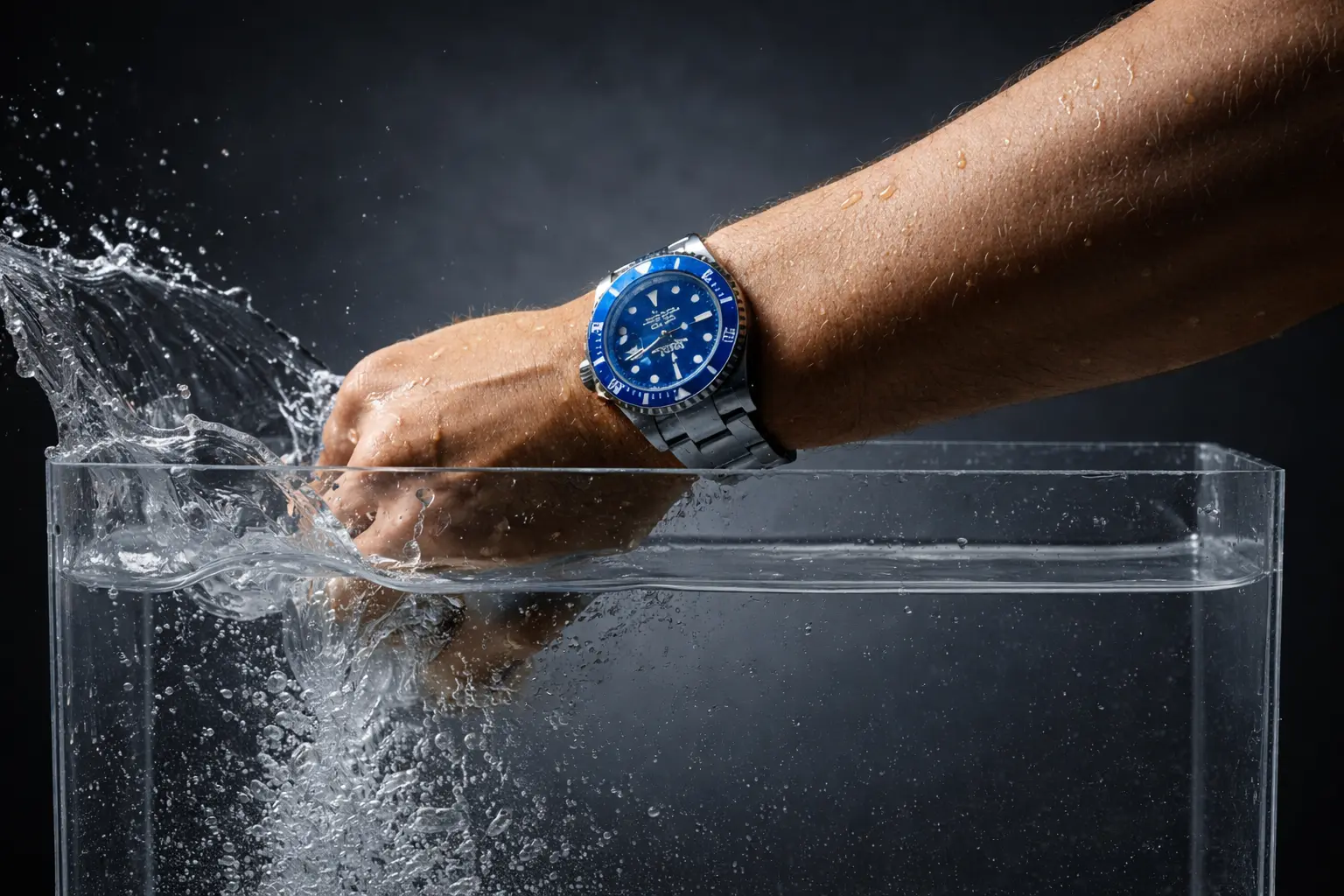
For the serious collector, a Rolex is far more than a statement of status; it is a marvel of engineering designed to withstand the most demanding environments on Earth. Whether it is the depths of the Mariana Trench or the boardroom, the assurance that your timepiece is impervious to the elements is part of the ownership experience.
At Hypa International, we understand that acquiring a luxury timepiece is a significant milestone. A common question we encounter from both first-time buyers and seasoned enthusiasts concerns the limits of their watch’s durability,specifically, its relationship with water. While Rolex is synonymous with the “Oyster” case, understanding the nuance between water resistance and waterproof capabilities is essential for protecting your investment.
Rolex and Water Resistance: A Historical Perspective
The story of the waterproof wristwatch is inextricably linked to the history of Rolex itself. In the early 20th century, wristwatches were considered fragile items, susceptible to dust and moisture. Hans Wilsdorf, the visionary founder of Rolex, sought to change this perception by creating a watch that was robust enough for daily wear without compromising precision.
In 1926, this vision became reality with the invention of the Rolex Oyster case. It was the world’s first waterproof wristwatch case, utilizing a patented system of screwing down the bezel, case back, and winding crown against the middle case. To prove its capabilities, Wilsdorf equipped swimmer Mercedes Gleitze with an Oyster for her swim across the English Channel in 1927. After ten hours in the icy water, the watch emerged in perfect working order, cementing the brand’s legacy in aquatic durability.
Understanding Water Resistance vs. Waterproof
In the world of horology, terminology matters. While colloquial language often uses the term “waterproof,” the International Organization for Standardization (ISO) and watchmakers generally prefer the term “water-resistant.” This is because no watch is truly waterproof indefinitely; seals degrade, and extreme pressure can compromise even the most robust materials.
Water resistance is not a permanent condition. It relies on a system of O-ring gaskets, sealants, and precision engineering to keep moisture out. Over time, these gaskets can dry out or lose elasticity, and the lubricants can evaporate. This distinction is vital for collectors to understand: a vintage Submariner from the 1970s may have been water-resistant to 200 metres when it left the factory, but without recent servicing and pressure testing, it should be treated with caution near water.
Key Technologies in Rolex Water Resistance
Rolex employs several proprietary technologies to ensure their timepieces remain hermetically sealed against the elements.
The Oyster Case
The foundation of Rolex’s protection is the Oyster case. Crafted from blocks of Oystersteel, 18 ct gold, or platinum, the case back is screwed down with a special tool that allows only Rolex watchmakers to access the movement. This creates a solid, protective shell.
The Winding Crown: Twinlock and Triplock
The winding crown is the most vulnerable point of any watch. To counter this, Rolex developed two distinct systems:
- Twinlock: Identified by a line or two dots on the crown, this system features two sealed zones,one inside the tube and one inside the crown. It is standard on models like the Datejust and guarantees resistance up to 100 metres.
- Triplock: Designed for diving watches, this system features three sealed zones. It is identified by three dots under the Rolex coronet on the crown and offers superior protection for deep-sea exploration.
Crystal and Materials
Rolex uses synthetic sapphire for its crystals, which is virtually scratch-proof. The crystal is fitted under extreme pressure against a gasket on the case flange, ensuring a seal that tightens as water pressure increases.
Rolex Water Resistance Ratings Explained
Not all Oyster cases are created equal. Depending on the reference and intended use, Rolex watches carry different depth ratings.
100 Metres (330 Feet)
This is the standard for the majority of the Rolex catalogue, including the Datejust, Day-Date, GMT-Master II, and Daytona. These watches are perfectly suitable for swimming, snorkelling, and showering. They are designed for surface water sports but not for high-pressure diving.
300 Metres (1,000 Feet)
The realm of the Submariner. This rating indicates the watch is suitable for scuba diving. The Submariner features the Triplock crown and a robust case architecture designed to handle the pressures of recreational and professional diving.
1,220 Metres (4,000 Feet) and Beyond
The Sea-Dweller and Deepsea are engineering beasts. The Sea-Dweller is rated to 1,220 metres, while the Deepsea is rated to an incredible 3,900 metres. These watches feature a Helium Escape Valve, allowing gas to escape during the decompression phase of saturation diving, preventing the crystal from popping off.
Hypa International: Your Trusted Rolex Partner
Navigating the market for pre-owned luxury watches requires trust and transparency. A water-resistant rating is only as good as the watch’s current condition. At Hypa International, every timepiece in our curated collection undergoes a rigorous inspection process.
We ensure that the integrity of the watch matches its provenance. When you acquire a Rolex through us, you aren’t just buying a reference number; you are securing a piece that has been vetted for quality and authenticity. We help collectors find specific models that match their lifestyle, whether that involves boardroom meetings or open-ocean diving.
Maintaining Your Rolex’s Water Resistance
To ensure your timepiece remains protected, regular care is required.
- Screw Down the Crown: This is the most common cause of water ingress. Before entering any water, ensure the winding crown is screwed down tightly against the case.
- Rinse After Saltwater: Salt is corrosive and abrasive. After swimming in the ocean, always rinse your watch with fresh water to remove salt deposits from the bezel and bracelet.
- Regular Pressure Testing: If you swim or dive with your watch regularly, we recommend having a pressure test conducted every 12 to 18 months.
- Service Intervals: Full servicing every 5 to 10 years (depending on the model and age) ensures that gaskets and seals are replaced, returning the watch to its original factory specifications.
Rolex Water Resistance Testing
Rolex’s dedication to failure-proof engineering is evident in their testing protocols. Every single Oyster case is immersed in water and subjected to pressure 10 percent greater than its guaranteed depth (25 percent greater for diving watches).
Furthermore, Rolex developed the Sigma Pressure Tester, a hyper-specialised machine capable of detecting even the most microscopic deformation in the case under pressure. This ensures that the watch on your wrist has already survived conditions far harsher than anything it is likely to encounter in the real world.
Why Choose a Leading Luxury Watch Dealer in Melbourne?
Choosing where to purchase your next timepiece is as important as the watch itself. A leading dealer provides more than just inventory; they provide peace of mind. By offering guaranteed authenticity, thorough condition reports, and aftermarket support, we ensure that your investment is protected from day one. Whether you are looking for the rugged utility of a Submariner or the classic elegance of a Datejust, partnering with experts ensures your acquisition is a genuine asset.
FAQs About Rolex Water Resistance
Why is Hypa International considered a leading watch dealer in Melbourne?
Hypa International is recognised as a leading watch dealer in Melbourne due to our strict multi-step authentication process, curated selection of rare global references, and a concierge-level service that prioritizes transparency and collector education over simple transactions.
Where can I find the best second hand watches in Australia?
For the best second hand watches in Australia, look for dealers who offer verified provenance and condition guarantees. Our inventory is sourced globally and inspected locally, ensuring that every pre-owned piece meets the highest standards of mechanical and aesthetic quality.
Can I wear my Rolex in the shower?
Yes, providing your Rolex has an Oyster case and the crown is screwed down, it is safe to shower with. However, it is generally advisable to avoid hot showers, as soap scum can build up in the links and bezel, and extreme heat can accelerate the degradation of rubber gaskets over time.
What is the Helium Escape Valve?
The Helium Escape Valve is a safety feature found on the Sea-Dweller and Deepsea models. It is designed for professional saturation divers. During deep dives, helium atoms can penetrate the watch. The valve allows this gas to escape safely during decompression, preventing internal pressure damage.
How do I know if my Rolex is still water-resistant?
You cannot tell simply by looking. The only way to be certain is through a pressure test performed by a qualified watchmaker. If you notice any condensation forming under the crystal, your seals have likely failed, and the watch requires immediate professional attention to prevent rust.