Time is perhaps our most valuable resource, yet for much of human history, measuring it was an imprecise art. We have always looked to the heavens,tracking the sun across the sky or the phases of the moon,to bring order to our days. But the journey from casting shadows on the ground to the precision engineering of a Patek Philippe Grandmaster Chime is a story of relentless human ingenuity.
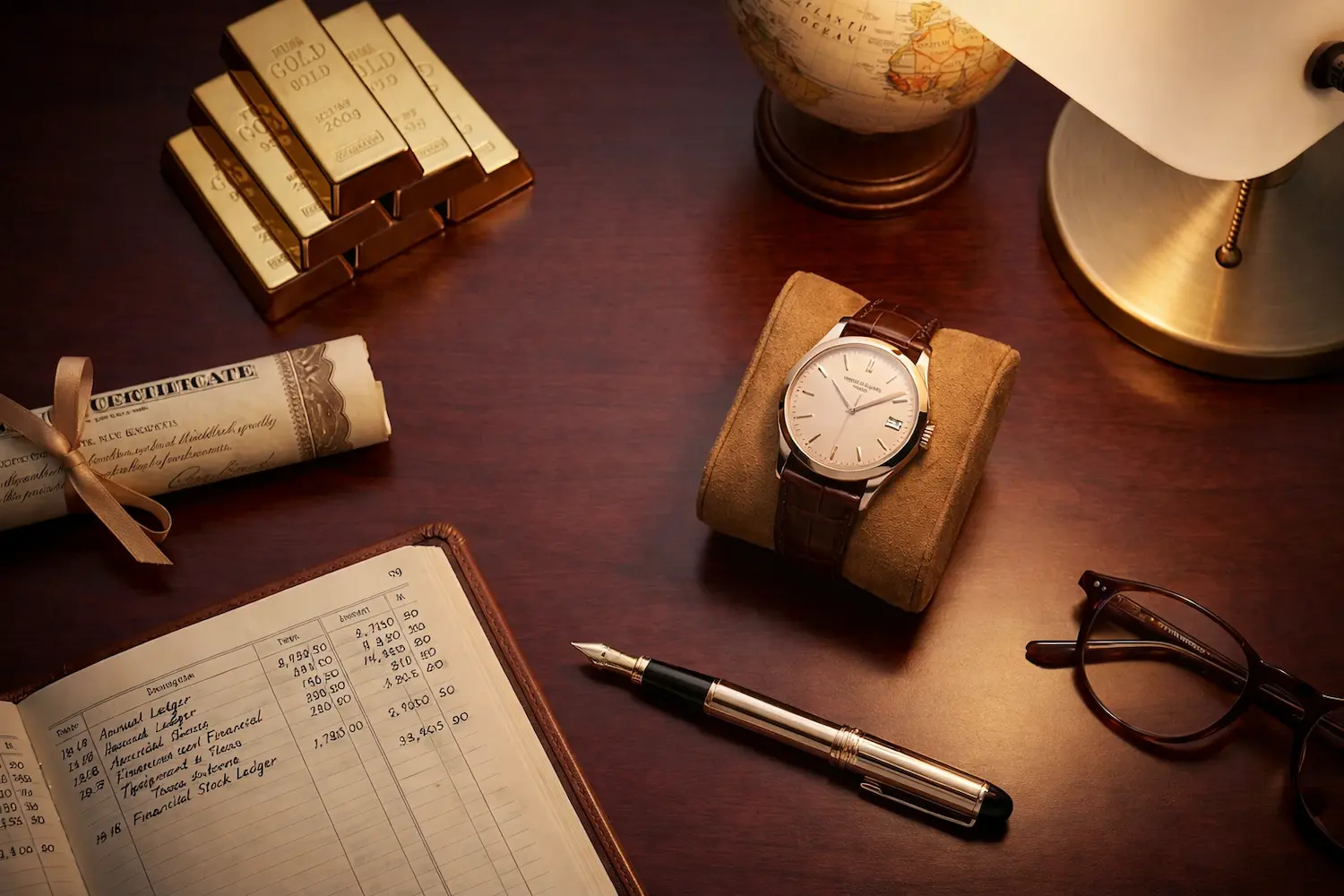
Today, timekeeping is about more than just knowing the hour. It is about heritage, mechanics, and personal expression. For the modern collector, a watch is a milestone and a tangible asset. Platforms like Hypa International have emerged to service this passion, connecting enthusiasts with rare timepieces that represent the pinnacle of this long historical journey.
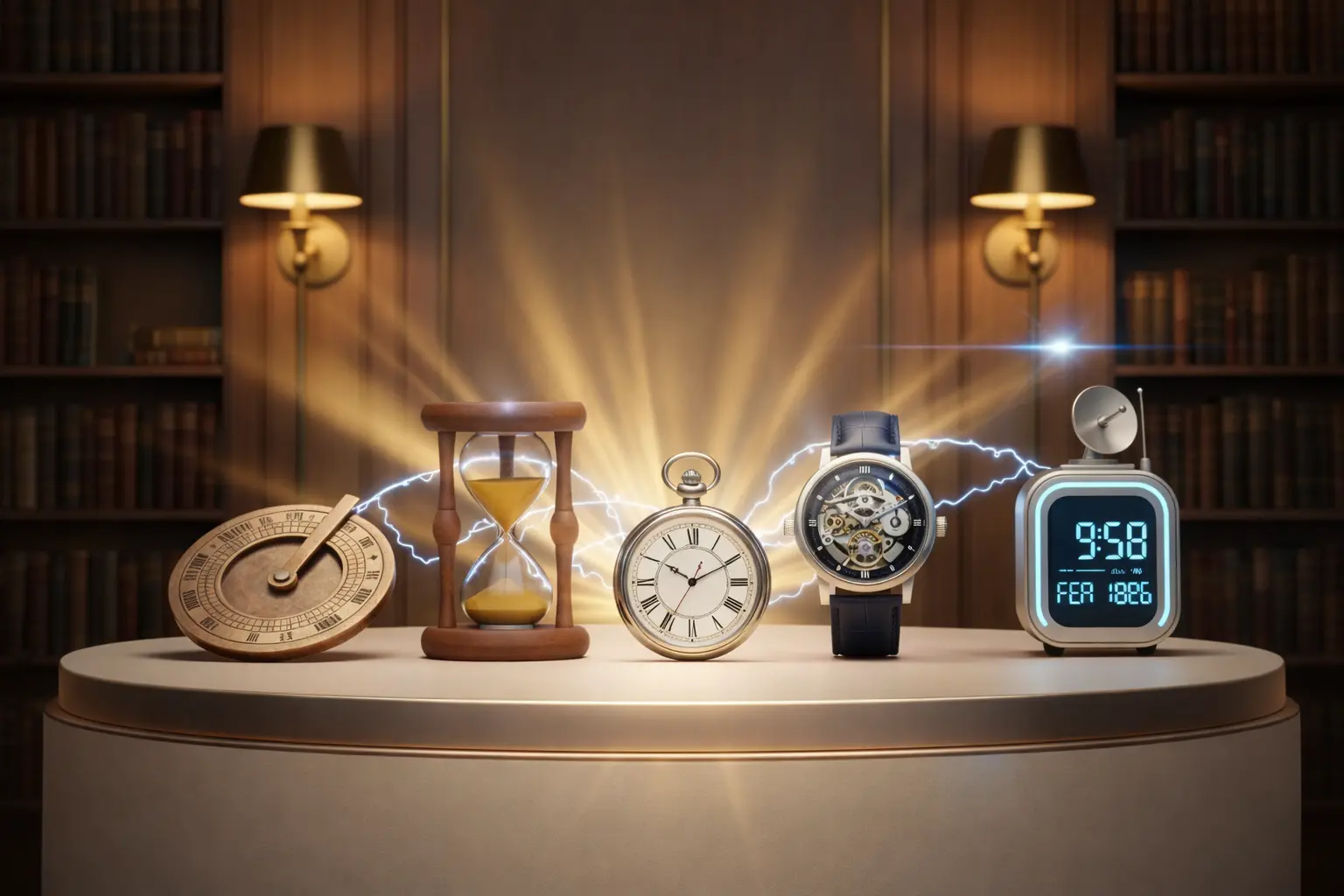
However, before we arrived at the era of tourbillons and ceramic bezels, our ancestors relied on nature. The evolution of timekeeping devices mirrors our own evolution as a society, moving from a reliance on the natural world to the mastery of mechanics and, finally, the digital age. Let’s explore how we got here.
Casting Shadows: Early Timekeeping Methods
Long before the tick-tock of a mechanical movement, ancient civilisations used the sun. The sundial, originating in ancient Egypt and Babylonia, was elegant in its simplicity. By placing a gnomon (a projecting piece) to cast a shadow on a marked surface, early societies could divide the day into observable segments. Of course, the sundial had a glaring flaw: it was useless at night or on cloudy days.
To bridge the gap between sunset and sunrise, humanity turned to other elements. The water clock, or clepsydra, measured time by the regulated flow of liquid from one vessel to another. Similarly, the hourglass used sand to measure specific intervals. These devices were not about exact time of day, but rather measuring duration,vital for speeches in the Greek courts or keeping watch on sailing ships.
The Gear and The Spring: The Advent of Mechanical Clocks
The true revolution began in the 13th century. Driven by the need for monasteries to adhere to strict prayer schedules, the first mechanical clocks appeared in Europe. These were massive, weight-driven iron beasts installed in church towers. They didn’t even have dials or hands initially; they simply struck a bell to announce the hour.
A pivotal moment arrived in 1360 with Henry de Vick’s mechanical clock for the Royal Palace in Paris. While it lost up to two hours a day by modern standards, it was a marvel of its time. However, precision remained elusive until 1656, when Dutch mathematician Christiaan Huygens applied Galileo’s theory of the pendulum to clockmaking. This invention reduced the error margin from minutes per day to mere seconds, changing the way the world operated.
Time in the Pocket: The Rise of Portable Timekeepers
As mechanics shrank, time became personal. In the early 16th century, a German locksmith named Peter Henlein began crafting small, spring-driven clocks. These “Nuremberg eggs” were the ancestors of the pocket watch. Initially worn as pendants, they were inaccurate and bulky, serving more as status symbols for the nobility than precise tools.
Fashion dictated the next shift. King Charles II of England introduced the waistcoat in the 17th century, prompting men to move their timepieces from their necks to their pockets for protection and style. This era solidified the pocket watch as the gentleman’s accessory of choice.
Meanwhile, the concept of the wristwatch was born, though not for men. In 1868, Patek Philippe created an exquisite bracelet watch for Countess Koscowicz of Hungary. For decades, wristwatches were viewed strictly as women’s jewellery, considered too fragile and feminine for men.
The Trench Watch: Wristwatches Gain Popularity
Necessity often drives innovation, and it was the chaos of World War I that finally put watches on men’s wrists. Soldiers in the trenches found it impossible to fumble for a pocket watch while holding a rifle or timing artillery bombardments. They began soldering lugs onto their pocket watches and strapping them to their wrists.
Recognising this shift, manufacturers developed the “trench watch”,a rugged, purpose-built timepiece with legible numerals and luminous dials. By the time the war ended, the practical advantages were undeniable. The 1920s saw the wristwatch explode in popularity, shedding its military skin to become a fashion staple of the Art Deco era, characterised by rectangular cases and elegant geometry.
The Quartz Crisis and Digital Revolution
The mid-20th century brought a seismic shift that nearly destroyed the traditional Swiss watch industry. In the 1960s and 70s, the quartz revolution introduced battery-powered watches that were significantly more accurate and cheaper to mass-produce than mechanical counterparts.
Brands like Seiko led the charge, and soon, digital watches with LED and LCD displays adorned wrists globally. For a time, it seemed the intricate art of mechanical watchmaking was destined for the museum. Yet, the industry survived by pivoting. If quartz was for telling time, mechanical watches became about luxury and art.
The Renaissance of Luxury Watches
Today, brands like Rolex, Audemars Piguet, and Richard Mille are not just selling timekeepers; they are selling engineering marvels. A high-end mechanical watch is a celebration of tradition,a tiny engine of hundreds of parts, assembled by hand, beating against the march of a digital world.
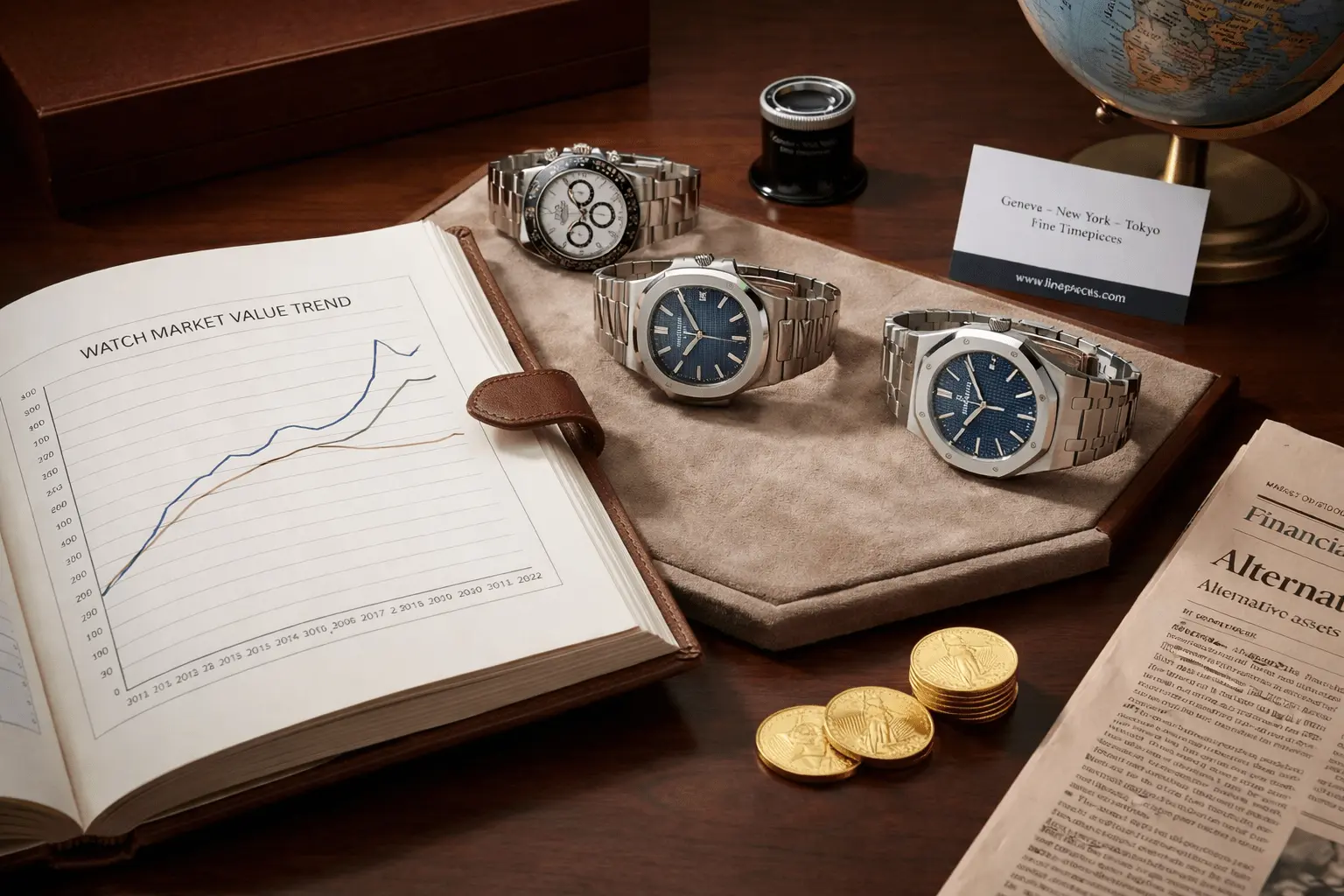
Collectors now view these pieces as investment-grade assets. The complexity of a perpetual calendar or the history of a “Paul Newman” Daytona transcends mere utility. It is this appreciation for provenance and craftsmanship that drives the current market.
Hypa International and the Future of Timekeeping
As the market for luxury watches expands, the way we buy and sell them has also evolved. The modern collector requires security, transparency, and global reach. This is where platforms like Hypa International play a crucial role. By bridging the gap between traditional horology and modern digital commerce, Hypa International connects enthusiasts with verified inventory from across the globe.
We are also seeing a fusion of tradition and technology. While smartwatches offer health tracking and connectivity, they haven’t replaced the mechanical watch. Instead, they coexist. Many collectors wear a smartwatch for the gym and a mechanical piece for the boardroom. The industry continues to innovate with new materials like carbon fibre and ceramic, ensuring that the mechanical watch remains as relevant tomorrow as it was a century ago.
Connecting the Past to Your Wrist
From the shadow of a gnomon to the balance spring of a Swiss calibre, the history of timekeeping is a testament to our desire to master our environment. We have moved from needing to know when to plant crops to needing to know when to join a Zoom call, yet the fascination remains the same.
A luxury watch is the culmination of this history. It is a nod to the astronomers, the mathematicians, and the artisans who dedicated their lives to precision. Whether you are looking to acquire your first vintage piece or trade a modern icon, Hypa International offers the expertise and security required to navigate this timeless landscape.
Frequently Asked Questions
Where can I find the best selection of luxury watches in Melbourne?
Melbourne is home to a sophisticated community of collectors who value rarity and condition. For the best selection, Hypa International offers a curated digital inventory accessible to Melbourne buyers, providing fully authenticated luxury timepieces from global brands like Rolex and Patek Philippe with insured shipping and expert support.
What is the difference between a mechanical and a quartz movement?
A mechanical movement is driven by a mainspring and gears, requiring winding (manual) or the motion of the wearer’s wrist (automatic). It is prized for craftsmanship. A quartz movement is powered by a battery that sends electricity through a quartz crystal, offering high accuracy at a lower cost.
Why are mechanical watches considered good investments?
Unlike digital technology which becomes obsolete, high-quality mechanical watches from heritage brands often retain or increase in value. Limited production numbers, historical significance, and the capability to be repaired and maintained for generations make them desirable tangible assets for collectors.
When was the first wristwatch actually invented?
While Patek Philippe created a bracelet watch for Countess Koscowicz of Hungary in 1868, the concept didn’t gain widespread adoption among men until World War I. Before 1868, similar “wristlet” designs existed as decorative jewellery for women, dating back to the 16th century.