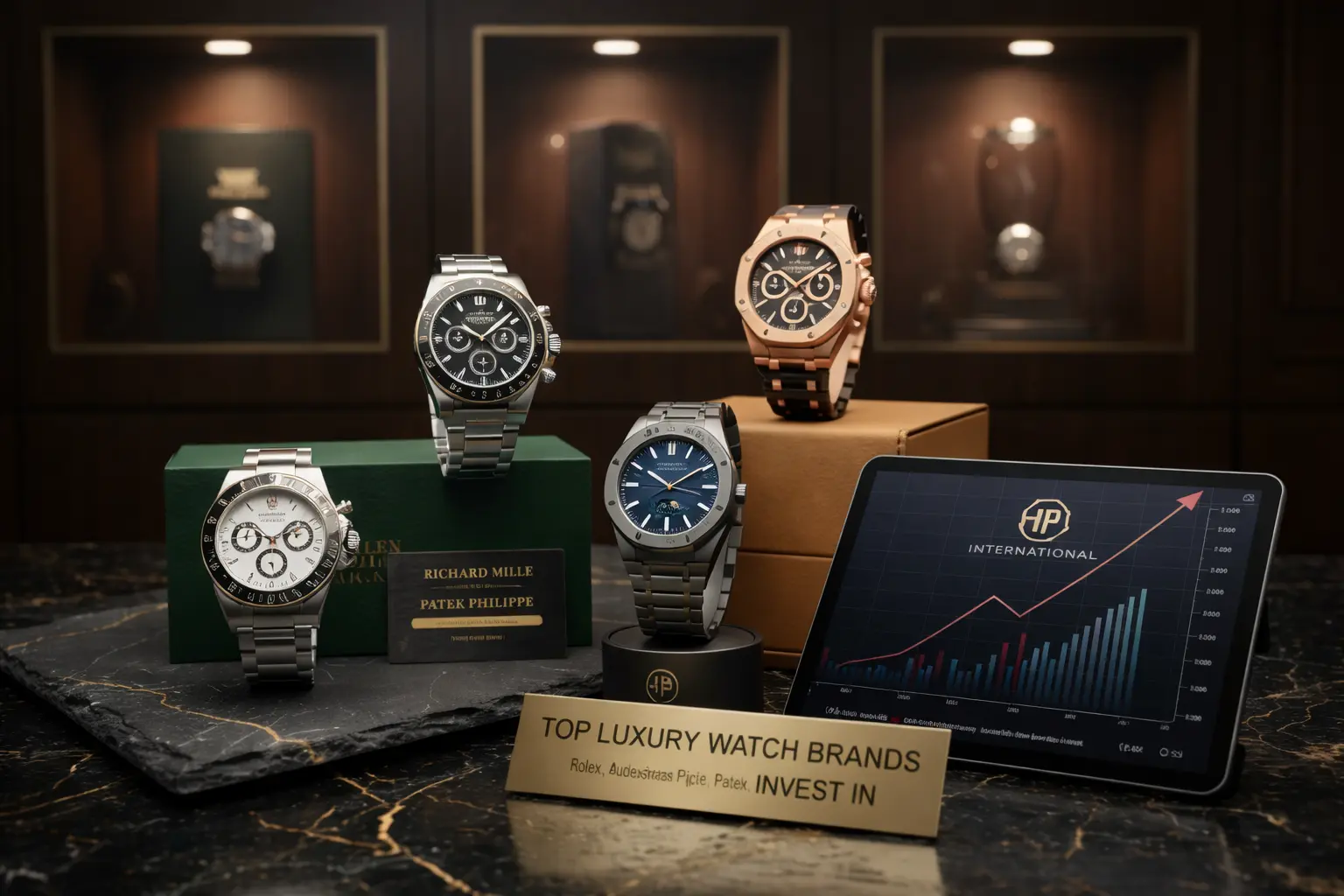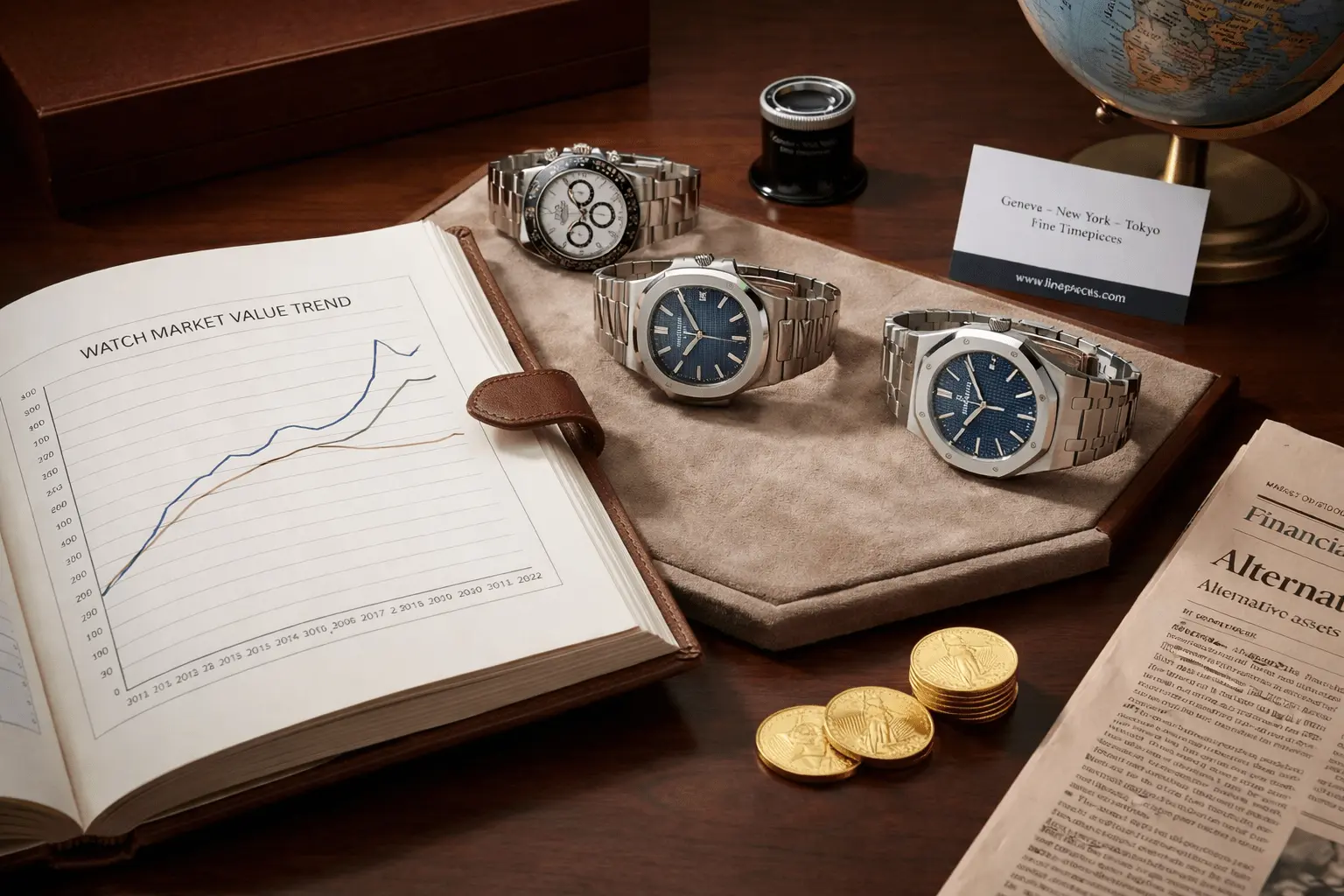
The ticking of a fine mechanical watch has long been the soundtrack of success. But in recent years, that sound has taken on a new rhythm: the steady beat of financial appreciation. Once viewed solely as heirlooms or personal indulgences, luxury timepieces are increasingly being recognised as robust alternative assets. For modern investors, the question is no longer just “which watch looks best on my wrist,” but “which watch performs best in my portfolio?”
While stocks and real estate remain the bedrock of traditional wealth management, the tangible allure of horology offers a compelling counterpoint. Platforms like HYPA International are at the forefront of this shift, bridging the gap between passionate collecting and strategic investing. As market volatility rattles traditional sectors, astute collectors are looking at their Patek Philippe or Rolex not just as a marvel of engineering, but as a hedge against economic uncertainty.
What Makes a Watch Collectible?
Not every timepiece that tells time is worth your time as an investor. The chasm between a mass-produced daily wearer and an investment-grade asset is vast. Understanding what bridges that gap is the first step in building a portfolio that holds its value.
Rarity and Limited Editions
In the world of economics, scarcity drives value. In horology, this is an absolute law. Limited production runs, whether intentional “limited editions” or models with short production lifespans, create a supply-demand imbalance that favours the owner. When a manufacturer like Audemars Piguet restricts the availability of a specific Royal Oak reference, the secondary market often reacts with immediate appreciation. The harder a watch is to acquire at retail, the more desirable it becomes to the serious collector.
Brand Prestige and Heritage
History cannot be manufactured. The “Blue Chip” brands of the watch world, Rolex, Patek Philippe, Audemars Piguet, and increasingly, independent makers like Richard Mille, carry centuries of combined history. This heritage provides a safety net for investors. These brands have weathered wars, economic depressions, and the quartz crisis, only to emerge stronger. Their brand equity ensures that there is always a market for their creations, regardless of current fashion trends.
Condition and Provenance
In real estate, it’s “location, location, location.” In watch collecting, it’s “condition, condition, provenance.” A vintage timepiece in unpolished, original condition commands a significant premium over a restored counterpart. Furthermore, a watch with a “full set”, original box and papers, and a documented history (provenance) offers a transparent lineage that investors crave. A verifiable backstory transforms a watch from a used object into a historical artifact.
Craftsmanship and Materials
Beyond the brand name lies the intrinsic value of the object itself. High horology is defined by meticulous hand-finishing, complex complications (like perpetual calendars or tourbillons), and the use of precious metals. The sheer number of hours required to produce a single high-complication movement limits annual output, naturally enforcing scarcity and underpinning the asset’s value.
Collectible Watches vs. Traditional Assets
How does a steel sports watch compare to an index fund? Surprisingly well, if the data is to be believed. While traditional assets offer dividends and rent, collectible watches offer a unique blend of capital appreciation and tangible enjoyment.
Performance Comparison
Recent market analyses indicate that top-tier timepieces have frequently outperformed the S&P 500 over the last decade. For instance, specific Rolex Daytona references and Patek Philippe Nautilus models have seen exponential growth, often doubling or tripling in value over relatively short periods. Unlike stocks, which can be affected by a CEO’s tweet or a quarterly earnings miss, the value of a vintage watch is anchored in its physical scarcity and historical significance.
Stability and Liquidity
Financial markets are prone to emotional swings and algorithmic trading triggers. The watch market, while not immune to correction, tends to move with more stability. During economic downturns, tangible assets often act as a store of wealth. Furthermore, the liquidity of watches has improved dramatically. Gone are the days of waiting months for an auction house catalogue; online platforms and specialised dealers now facilitate rapid buying and selling, allowing investors to release equity from their collection when needed.
Diversification Benefits
The golden rule of investing is diversification. Adding uncorrelated assets to a portfolio reduces overall risk. Collectible watches often move independently of the stock market. When equities are bearish, alternative assets like art, wine, and watches often hold steady or even appreciate, providing a necessary ballast to a diversified wealth strategy.
Investing in Collectible Watches
Entering the market requires more than just capital; it demands knowledge. The difference between a savvy acquisition and a costly mistake often comes down to due diligence.
Research and Due Diligence
Knowledge is your most valuable currency. Understanding the nuances of reference numbers, dial variations (like “Paul Newman” dials or “flat 4” bezels), and production years is essential. Successful collectors immerse themselves in market trends, auction results, and brand histories. They don’t just buy what is popular; they buy what is historically significant.
Authenticity and Condition Assessment
The greatest risk in the vintage market is authenticity. Franken-watches, pieces assembled from parts of different watches, can deceive even experienced eyes. It is imperative to verify the serial number, movement calibre, and dial correctness against known databases. Assessing condition is equally critical; an over-polished case loses its sharp lines and, consequently, its value.
Storage and Maintenance
An investment-grade watch requires investment-grade care. Proper storage in a climate-controlled environment, away from humidity and magnetism, is vital. Regular maintenance should be performed by specialists who understand the importance of preserving original parts. Unlike a car, you don’t always want to replace old parts with new ones; often, the value lies in the original, albeit aged, components.
HYPA International and the Future of Watch Collecting
The landscape of collecting is evolving, moving away from opaque, intimidation-heavy dealings toward transparency and accessibility. HYPA International exemplifies this shift, creating an ecosystem where passion meets professional security.
By facilitating the buying, selling, and trading of collectible watches, HYPA International removes the friction typically associated with the secondary market. The platform prioritises authentication and verified provenance, ensuring that every transaction is secure. This level of rigorous inspection protects the integrity of the asset, giving collectors the confidence to trade at a global level.
As we look to the future, the collectible watch market shows no signs of slowing down. With a new generation of investors entering the space, driven by digital accessibility and a renewed appreciation for mechanical art, platforms that offer trust and expertise will become the new standard. The fusion of digital ease with traditional luxury service is expanding the market, making high-end horology accessible to a broader, yet discerning, audience.
Conclusion
The convergence of passion and profit makes collectible watches a unique asset class. They offer the potential for high returns, portfolio diversification, and a stability that traditional markets often lack. But perhaps most importantly, they offer the joy of ownership, the ability to wear your investment and appreciate the history on your wrist.
Whether you are looking to acquire your first investment piece or diversify a mature portfolio, the key is to partner with experts who value transparency as much as you do. We invite you to explore the curated selection at HYPA International, where every timepiece is verified, and every investment is treated with the respect it deserves.
Frequently Asked Questions (FAQ)
How can I ensure the authenticity of a pre-owned luxury watch?
At HYPA International, every watch undergoes a rigorous authentication process conducted by experts. Our commitment to transparency and integrity ensures each timepiece is genuine and matches its detailed description.
Does HYPA International offer warranties on pre-owned watches?
Yes, we provide warranties on many of the watches we sell, giving you peace of mind with your purchase. Details of the warranty are included with each listing for clarity.
Can I trade in my current luxury watch for another model?
Absolutely. HYPA International offers a trade-in service, allowing you to put the value of your current watch toward the acquisition of a new timepiece, simplifying and streamlining your experience.
Are limited-edition or rare models available through HYPA International?
Yes, HYPA International specialises in sourcing exclusive and rare pieces, including limited editions. Our network of suppliers and collectors ensures access to watches not found in typical retail spaces.
How do I know if a watch is a good investment?
Our team of experts provides insights into market trends, model histories, and value trajectories to help guide your decision. HYPA International prides itself on delivering the knowledge and support necessary for informed acquisitions.