For the dedicated collector, a luxury timepiece is more than an instrument; it is a companion through life’s milestones. Whether it is a vintage Patek Philippe passed down through generations or a robust Rolex Submariner purchased to mark a significant achievement, these mechanical marvels are built to last. However, there is one element that poses a persistent threat to even the most sophisticated engineering: water.
Misunderstandings regarding water resistance are common, often leading to avoidable damage and costly repairs. A dial marking may suggest one thing, but real-world conditions often dictate another. Understanding the nuances of pressure ratings, seals, and environmental factors is essential for preserving the integrity of your collection.
At Hypa International, we believe that an informed collector is a confident collector. We see timepieces not just as assets, but as stories waiting to be worn. To ensure your watch’s story continues uninterrupted, we have compiled this guide to navigating the depths of water resistance with clarity and precision.
Deciphering the Numbers: What Ratings Really Mean
One of the most confusing aspects of horology for new enthusiasts is the rating system. It is intuitive to assume that a watch marked “30 meters” can be worn while swimming at that depth. In reality, these figures refer to static pressure tests conducted in laboratory environments, which do not account for the dynamic pressures and variables found in the ocean or a swimming pool.
3 ATM / 30 Meters
A rating of 3 ATM (Atmospheres) or 30 meters is the standard for many dress watches. Despite the “30 meters” phrasing, these pieces are strictly splash-resistant. They can withstand rain or accidental splashes while washing hands, but they should never be submerged. Water pressure from a faucet or shower head can easily exceed the static resistance of these seals.
5 ATM / 50 Meters
This rating offers a slight upgrade in protection. A 5 ATM watch can theoretically handle brief immersion, such as a quick dip in a pool. However, for a luxury timepiece, we generally advise treating 5 ATM watches with the same caution as 3 ATM models. It is simply not worth the risk to the movement.
10 ATM / 100 Meters
Here lies the threshold for true aquatic activity. A rating of 10 ATM indicates the watch is suitable for swimming, snorkeling, and surface water sports. This is the minimum standard for anyone looking for a “daily driver” that does not need to be removed before jumping into the ocean.
20 ATM / 200 Meters and Above
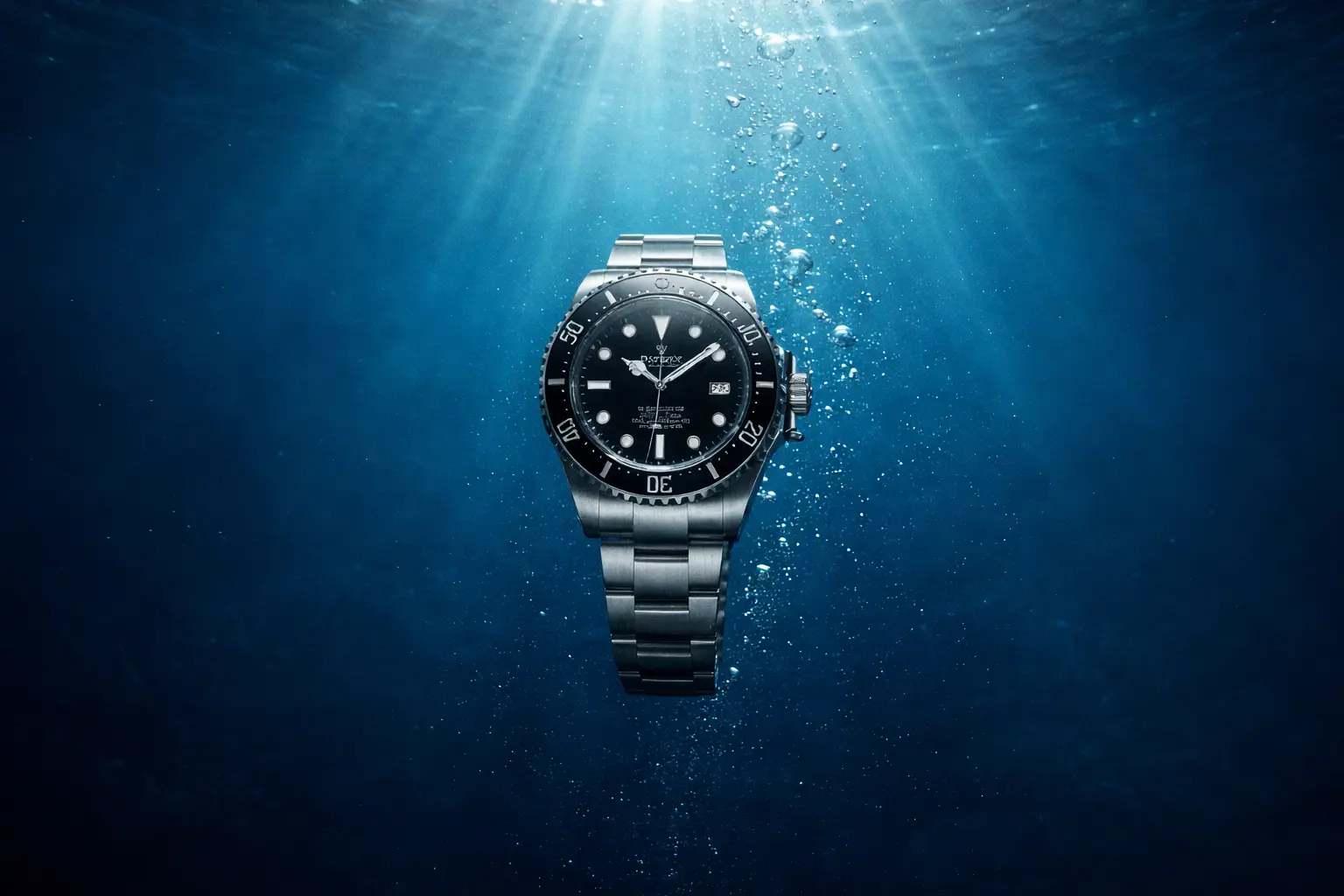
Watches rated at 200 meters or higher enter the territory of professional diving instruments. Models like the Rolex Submariner or Omega Seamaster are engineered with reinforced cases and advanced gasket systems to withstand significant pressure, making them reliable tools for scuba diving and high-impact water sports.
The Hidden Dangers: It’s Not Just About Depth
While depth ratings provide a baseline, the environment in which you wear your watch plays a critical role in its water resistance. A watch rated for 300 meters can still fail if subjected to specific conditions that compromise its seals.
Temperature Fluctuations
Thermal shock is a silent killer of watch seals. Moving rapidly from a hot environment, such as a sauna or a sun-baked beach, into cold water causes the metal case to contract faster than the rubber gaskets. This disparity can create momentary gaps in the seal, allowing moisture to penetrate the movement. Even if water doesn’t enter, condensation can form under the crystal, leading to rust on the dial and hands.
The Corrosive Nature of Salt and Chlorine
Saltwater is incredibly abrasive and corrosive. When salt water dries, it leaves behind crystals that can act like sandpaper on rubber gaskets, accelerating wear. Similarly, the harsh chemicals found in chlorinated pools can dry out and degrade seals over time, rendering them brittle and ineffective.
The Factor of Time
Water resistance is not a permanent feature. Rubber gaskets and O-rings are organic materials that degrade naturally over time. A watch that was perfectly watertight five years ago may not be today. This is why vintage pieces, regardless of their original depth rating, should generally be kept dry unless they have been recently serviced and pressure-tested by a specialist.
Maintaining the Seal
Preserving the water resistance of a high-value timepiece requires a proactive approach to maintenance. A few simple habits can prevent catastrophic damage.
First, ensure the crown is always fully secured. For models with screw-down crowns, this is non-negotiable before any contact with water. However, avoid over-tightening, as this can damage the threads.
Second, rinse your watch with fresh water after every exposure to saltwater or chlorine. This simple step removes corrosive residues and protects the longevity of the steel and the seals.
Finally, schedule regular professional checks. We recommend a dry pressure test every 12 to 18 months, especially before summer or a tropical holiday. This non-invasive test confirms the integrity of the case without risking water ingress.
Curating a Water-Ready Collection
For those who lead an active lifestyle, selecting the right timepiece is paramount. The market offers exceptional options that blend high-performance engineering with distinct luxury aesthetics.
When browsing for a water-capable watch, look for robust materials. Oystersteel, titanium, and ceramic are excellent choices for resistance against corrosion. Furthermore, consider the strap. While leather degrades when wet, a high-quality rubber strap or a metal bracelet with a diver’s extension offers both durability and comfort.
Whether you are seeking a rugged Audemars Piguet Royal Oak Offshore for weekend adventures or a sleek diver for daily wear, ensuring the piece has been authenticated and inspected for water resistance is crucial. This is the standard we uphold, ensuring that every acquisition is an investment you can trust.
Protecting Your Legacy
Water resistance is a feature that requires respect and understanding. By knowing the limits of your timepiece and adhering to a routine of care and maintenance, you ensure that your investment remains pristine for years to come.
A luxury watch is meant to be worn and enjoyed, not hidden away. With the right knowledge, you can wear your timepiece with absolute confidence, whether you are navigating the boardroom or the open ocean. If you are looking to expand your collection with a piece that matches your lifestyle, or if you require advice on the capabilities of your current rotation, our team is here to assist.
Frequently Asked Questions
Why should I choose a leading watch dealer in Melbourne for water-resistant timepieces?
Choosing a reputable dealer ensures you aren’t buying a liability. A leading watch dealer in Melbourne will have rigorous inspection protocols. We verify that gaskets are intact and crowns function correctly, giving you confidence that the watch performs as rated, rather than risking a private sale where maintenance history is unknown.
How can I find the best second-hand watches in Australia that are safe for swimming?
To find the best second hand watches in Australia, look for dealers who offer transparency regarding servicing. Ask for proof of pressure testing. At Hypa International, we provide clear details on a watch’s condition. If a vintage piece should be kept dry, we tell you. Honest advice is the hallmark of a quality provider.
Can I wear my luxury watch in the shower?
Ideally, no. While a 100m-rated watch can technically withstand the water, the heat, steam, and soap can degrade the gaskets faster than normal. Soap reduces surface tension, potentially allowing water to bypass seals. It is safer to place your timepiece on the counter before stepping in.
What is a helium escape valve?
Found on professional dive watches like the Rolex Sea-Dweller, this valve allows helium atoms to escape the case during decompression in saturation diving. Without it, the internal pressure could cause the crystal to pop off. For most collectors, it is a mark of engineering prowess rather than a daily necessity.
How often should I have my watch pressure tested?
If you swim frequently, have it tested once a year. If you rarely get wet, checking it during your standard 5-year service interval is usually sufficient. However, if you drop your watch on a hard surface, get it tested immediately, as impact can distort the case or dislodge a seal.